All Events
March 2026 Back to Top
Program Overview:
A media subject matter expert panel including security subject matter experts. At the beginning of the panel discussion, the moderator will introduce each panelist and will then ask tailored questions based on the panelist’s respective expertise. The moderator will then invite the panelists to provide their particular expertise and perspectives for each follow up topic. All panelists will also have an opportunity to provide their perspectives on every security topic. The panelists will also have a fifteen minute opportunity to respond to follow-up questions from the attendees.
Learning Objectives
After attending this session, the attendees will know:
- The definition of a subject matter expert. The roles, responsibilities, skills, and traits of a subject matter expert. A media subject matter expert should possess strong communications skills, including speaking clearly and articulately. Being a subject matter expert is no small feat. It requires dedication, continuous learning, and a willingness to share your knowledge with others.
- Learning how to get started as a media subject matter expert and what to learn to develop skills for a live on-air interview. What to say, what not to say, and how to prepare for each and every interview, including planning, preparation, research, and verifying sources.
- What to know about working with a professional news anchor and knowing when to talk and when to listen. Listening to a question and thinking through an answer before speaking. Staying apolitical and not offering an opinion about political and social issues by remembering your specific subject matter expertise.
- Understanding the expectations of a news program and the desired results of an interview with an expert. How their audience will benefit from the provided information. Also, how to control the topics of the interview by providing relevant questions and answers prior to the live television appearance.
- Discover how to critique a live television appearance post-interview, such as analysis of the answers to questions not provided prior to the interview. Every interview includes spontaneous questions and requires adeptness at commenting on a topic that is not part of the script.
April 2026 Back to Top
Program Overview:
Garry McCarthy’s leadership across more than four decades in law enforcement is closely associated with the transformation of modern, data driven policing. During his tenure with the New York City Police Department, McCarthy rose to Deputy Commissioner of Operations, where he led the department’s crime strategy for its more than 41,000 officers and played a central role in managing the NYPD’s COMPSTAT program. COMPSTAT revolutionized policing by using timely crime data, geographic analysis, and strict command level accountability to drive rapid decision making and measurable results. McCarthy further strengthened modern policing by creating the first Real Time Crime Center, bringing together intelligence, deployment strategies, and operational oversight to support real time decision making. His leadership was further tested during the September 11, 2001 terrorist attacks, where he was critically involved in directing the NYPD’s response and coordinating recovery efforts. Following 9/11, he was selected to lead the Metropolitan Committee on Counter Terrorism, strengthening information sharing and operational coordination among 43 federal, state, and local agencies.
Building on this foundation, McCarthy brought data driven strategies and technological innovation to his leadership roles in Newark and Chicago. In Newark, he emphasized performance metrics and accountability while navigating severe budget constraints. As Superintendent of the Chicago Police Department, he expanded the use of analytics, predictive policing tools, and real time crime centers, giving commanders and officers immediate access to data, video, and intelligence to prevent and respond to violent crime. By pairing technology with disciplined management and clear expectations, McCarthy delivered sustained reductions in crime, police shootings, and civilian complaints. His leadership legacy reflects a consistent commitment to smart policing, operational transparency, and results grounded in data rather than rhetoric.
Learning Objectives
After attending this session, the attendees will know:
- Learn how leaders manage large, complex organizations during crisis, drawing lessons from Garry McCarthy’s leadership of NYPD crime strategy for more than 41,000 officers and his role during the September 11, 2001 terrorist attacks.
- Identify leadership principles that produce sustained results, such as setting clear expectations, using performance metrics, maintaining transparency, and balancing reform with public safety in high pressure environments.
- Demonstrate how effective leaders build a culture of accountability and trust by aligning data, technology, and clear expectations to empower personnel while improving public confidence and organizational integrity.
May 2026 Back to Top
June 2026 Back to Top
August 2026 Back to Top
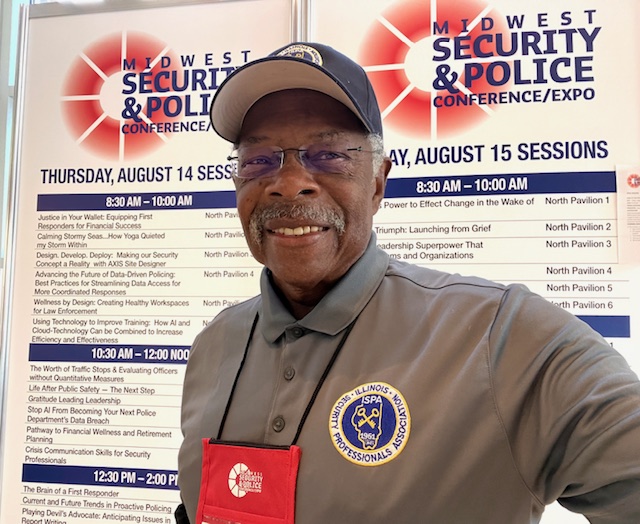
Mark your calendars for the 2026 Midwest Security and Police Conference/Expo! It's set to take place August 13th and 14th, 2026.
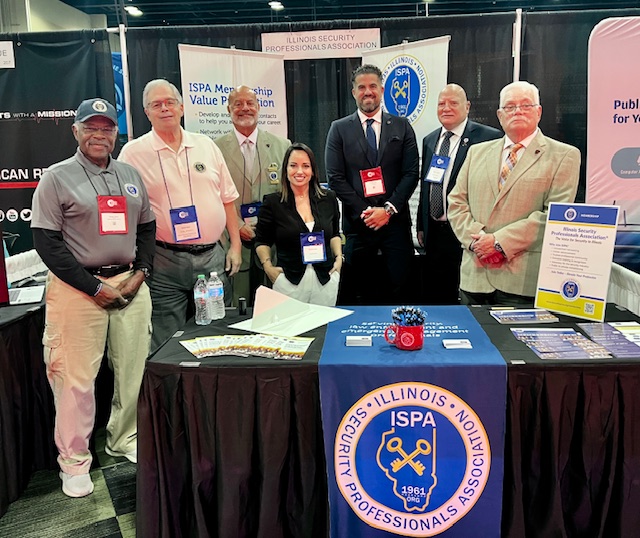
Visit ISPA at Booth 222, we are right next to the Illinois Association of Chiefs of Police booth.
We hope to see you at the Tinley Park Convention Center!
Find more information at http://mspce.com/